

Camo paint- The British Sniper method
Written by Nathan Foster on November 14th, 2010.
 0 comments
Hi all, I have finally had a chance to give my .308 Tactical a much needed overhaul. My Sightron S111 6-24x50 finally arrived so the 4-12 Leupold with its target turrets were removed from the Practical and mounted on the .308. I gave the Sightron a good test to check that the turret calibration was true to MOA and as usual for this brand, the Sightron was right on the money.
I have had a few camo painted rifles arrive on my bench this year and to be honest, the paint on some of these rifles has caused problems where it has run into the bedding (these rifles were bedded before I received them). Paint flaking and chipping during re-bedding was also a concern. For those contemplating a camo paint job to protect blued steel (or even a precious wood stock), the British sniper method is simply awesome. By using common wound dressing/ ligament binding cloth tape (many will be familiar with the elastoplast brand), the tape can be applied to the rifle, then painted with heavy coats of flat enamel paint.
Earlier this year, my wife did a test piece by binding my hunting knife handle in tape and painting it. The coating was heavy but the cloth ensures the paint cannot flake. The adhesive side of the tape offers tremendous rust protection while the paint locks the tape in place, an almost fibreglass like matrix. The knife handle stood up well to mud and blood through the winter and was relatively easy to clean. I also peeled back the tape after the trial period and the knife handle was perfectly preserved underneath. Following this, I gave the .308 Tactical the British Sniper tape and paint treatment. The finish is great, the metal is protected and can eventually be removed by simply peeling back the tape.
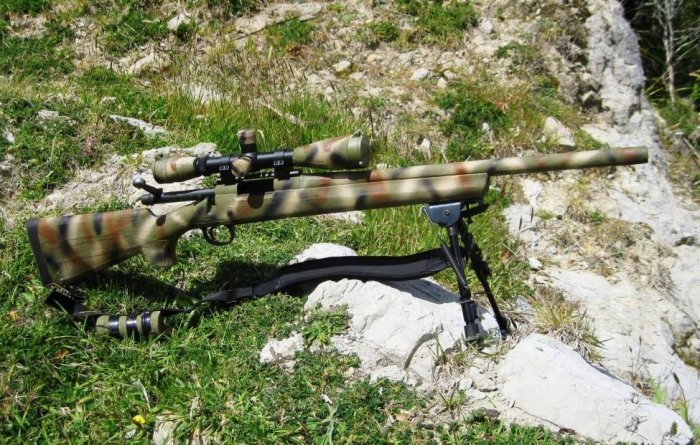
I have had a few camo painted rifles arrive on my bench this year and to be honest, the paint on some of these rifles has caused problems where it has run into the bedding (these rifles were bedded before I received them). Paint flaking and chipping during re-bedding was also a concern. For those contemplating a camo paint job to protect blued steel (or even a precious wood stock), the British sniper method is simply awesome. By using common wound dressing/ ligament binding cloth tape (many will be familiar with the elastoplast brand), the tape can be applied to the rifle, then painted with heavy coats of flat enamel paint.
Earlier this year, my wife did a test piece by binding my hunting knife handle in tape and painting it. The coating was heavy but the cloth ensures the paint cannot flake. The adhesive side of the tape offers tremendous rust protection while the paint locks the tape in place, an almost fibreglass like matrix. The knife handle stood up well to mud and blood through the winter and was relatively easy to clean. I also peeled back the tape after the trial period and the knife handle was perfectly preserved underneath. Following this, I gave the .308 Tactical the British Sniper tape and paint treatment. The finish is great, the metal is protected and can eventually be removed by simply peeling back the tape.









Comments